
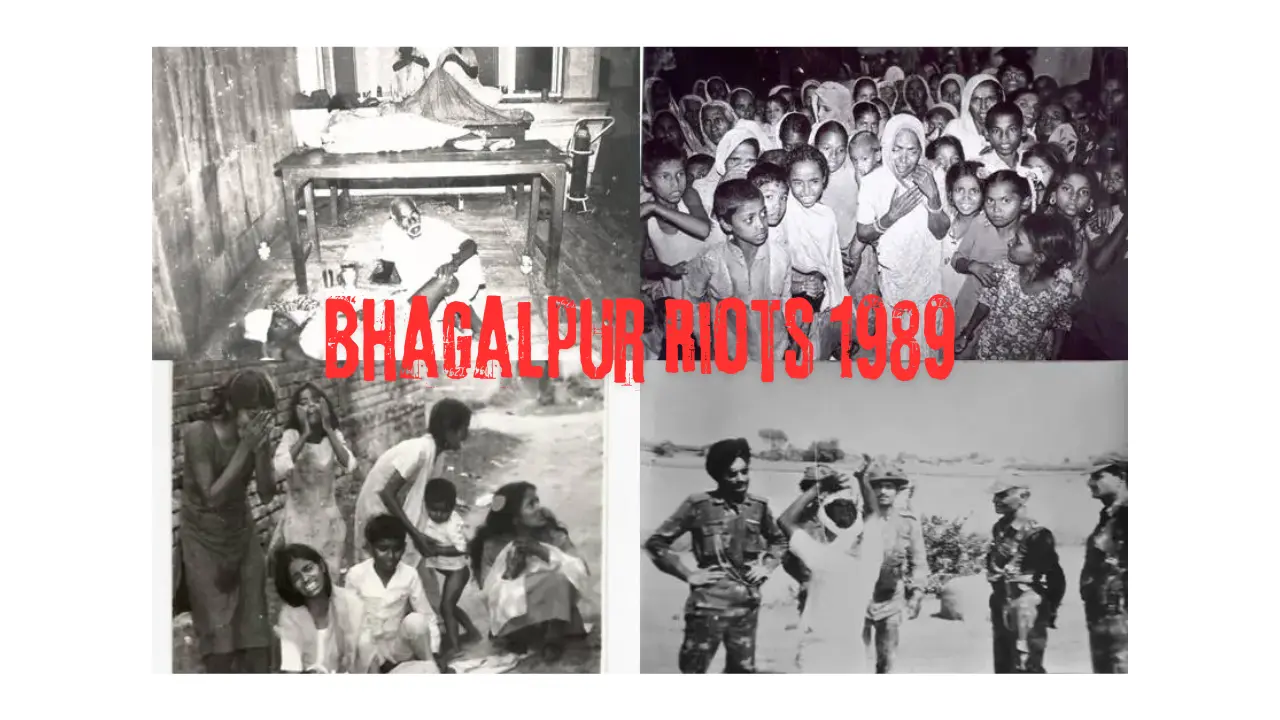
Though mostly eclipsed by the more well-known Delhi 1984 and Mumbai 1993 riots, the Bhagalpur riots of 1989 remain a sobering reminder of communal violence in India. This tragic incident, which took place in the Bhagalpur district of Bihar between October 24 and December 1989, resulted in the deaths of over 1,000 people, the displacement of 50,000 more, and the displacement of 50,000 more. Despite the severity of the violence, it largely vanished from public consciousness and only occasionally resurfaced in political debates.
Historical context and motives
Historically prone to communal violence, Bhagalpur became the focal point of violent riots during the Ram Janmabhoomi campaign—a movement aiming at building a Hindu temple at Ayodhya. The campaign, led by the Vishwa Hindu Parishad (VHP), consisted of Ramshila processions gathering bricks for the temple. Tensions exploded when one such procession, passing through a predominantly Muslim area, encountered opposition and violent reprisals. Speculations of mass deaths and the incendiary chants spoken throughout these marches heightened the violence.
The riot emerges
Starting on October 24, 1989, the riots swiftly extended over Bhagalpur and the other towns. The first conflict occurred in Tatarpur when a procession encountered opposition from the nearby Muslim community, leading the police to initiate shooting and unleash widespread bloodshed. Over the next three days, they massacred entire families, looted and set fire to Muslim property, and demolished places of worship. Driven by false information and communal hate, the violence tore Bhagalpur for two months, leaving claims of mass graves and savage killings.
Political consequences and reactions
The political effects of the riots were noteworthy. At the time, the way the Congress government managed the riots drew harsh criticism. Under pressure, the Congress ousted Satyendra Narayan Sinha, the then-Chief Minister, and battled to win Muslim allegiance, which turned to Lalu Prasad’s Janata Dal. Despite gaining political recognition, Lalu Prasad faced criticism for not pursuing justice for the victims, particularly those from his Yadav community.
Using ties to the Ram Janmabhoomi movement, the BJP strengthened its Hindutva support in the area through the riots. By the late 1990s, Bhagalpur had become a bastion for the BJP, which effectively secured the Lok Sabha seat in 2006 with Shahnawaz Hussain, a Muslim candidate, highlighting the intricate interaction of religious politics.
Inquiry Commissions and Justice: Questions
Set up in December 1989, the Bhagalpur Riots Inquiry Commission battled contradicting reports and delays. Despite the commission’s members denouncing the government’s inefficiency, the chairman’s report faced criticism for its exoneration of the government and its discounting of major administrative errors. Years later, only a small portion of the accused received guilty verdicts, leading to delays and inequality in the judicial system. Many victims carried on seeking acknowledgment and justice.
Historical and Contemporary Context
Though eclipsed by the following events, the Bhagalpur riots of 1989 had a long-lasting effect on the political scene of Bihar. The violence highlighted the ingrained social tensions and the role that political struggle plays in aggravating these disputes. Remembering Bhagalpur reminds Nitish Kumar’s government of the ongoing difficulties in tackling communal violence and guaranteeing justice as they review the NN Singh commission findings.
Bhagalpur’s legacy emphasizes the cyclical nature of violence and its effects on political fortunes, thus intertwining with the larger story of communal politics in India. The lessons remain absolutely vital in comprehending and resolving the causes of communal discontent in modern India as political leaders negotiate the complexity of communal relations.